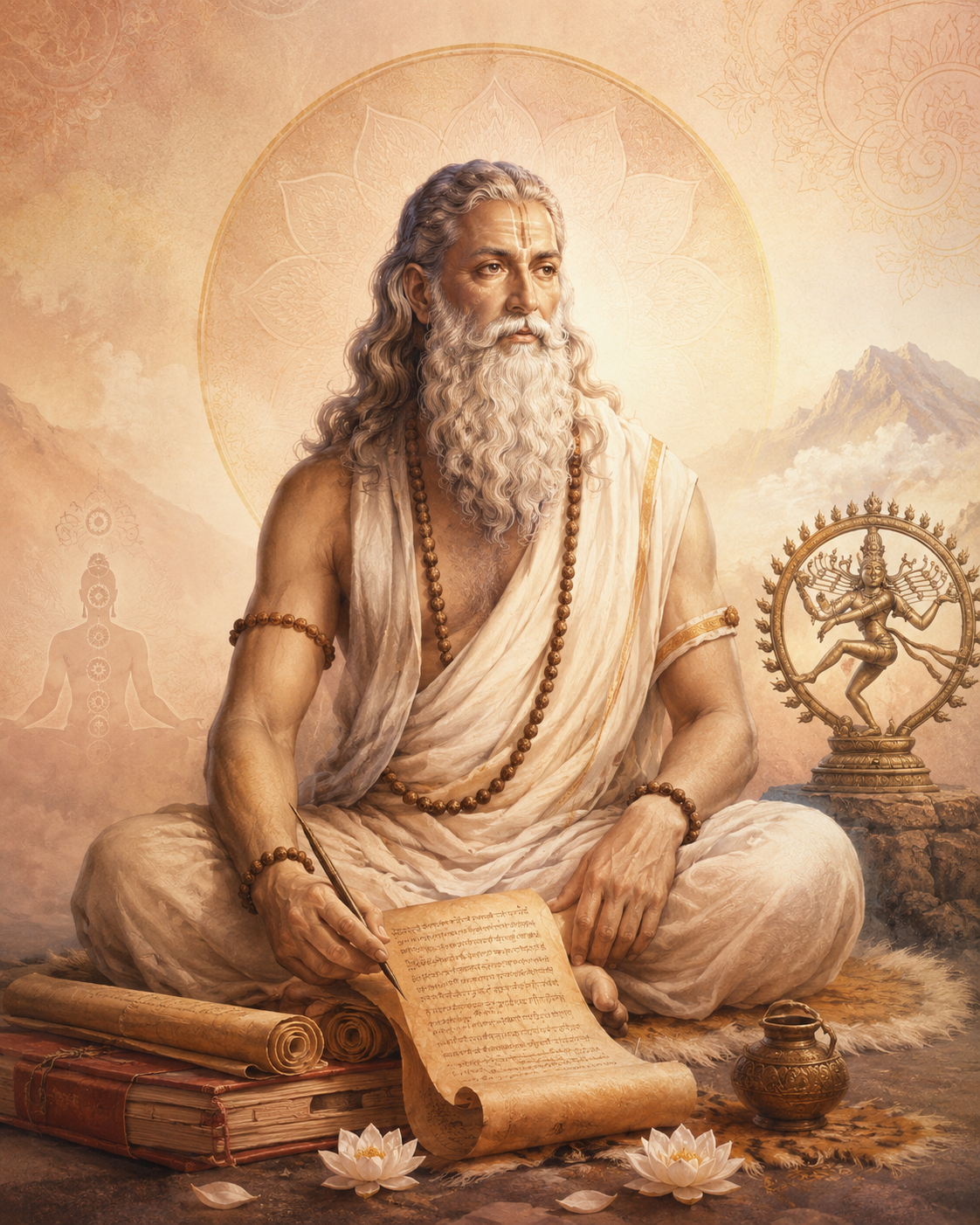
Patanjali — symbolic representation
Image unavailable
Patanjali Yoga Sutras
Explore the sutras through reading, search, reflection, and guided video by Pada.
About Patanjali
Maharshi Patanjali is traditionally remembered as the sage who systematized the path of Yoga through the Yoga Sutras. These short sutras guide the seeker from scattered thought toward discipline, clarity, inner steadiness, and liberation. Rather than treating yoga as only physical exercise, Patanjali presents it as a complete inner path for refining the body, breath, mind, and awareness.
What is Yoga?
In Patanjali’s Yoga Sutras, yoga is not merely physical exercise, posture, or flexibility. Asanas, breathing practices, and meditation are useful supports, but they are not the final meaning of yoga. Yoga is the disciplined settling of the mind, so that a person can see more clearly, live with greater awareness, and move toward inner freedom.
When the sutras are studied and practiced deeply, posture, breath, attention, and meditation begin to support one another naturally. The outer practices become gateways to inner steadiness, helping practitioners integrate the teachings into daily life.
Why Recitation Matters
Beyond study and practice, recitation plays an important role in the yogic tradition. A sutra is short, precise, and meant to be remembered. Reciting it repeatedly helps the words enter memory, breath, and awareness. In the Indian tradition, sound — dhwani — is not only heard by the ears; it is also felt in the body and mind. The rhythm of chanting can steady attention, calm the breath, and make the teaching easier to absorb.
Because yoga is learned through both understanding and experience, this Patanjali page offers more than reading and search. It also includes listening and viewing options organized by Pada, allowing the sutras to be explored through text, sound, and reflection.
पतंजलि के बारे में
महर्षि पतंजलि को परंपरा में उस ऋषि के रूप में स्मरण किया जाता है जिन्होंने योग के मार्ग को योगसूत्रों के माध्यम से व्यवस्थित रूप दिया। ये छोटे-छोटे सूत्र साधक को बिखरे हुए विचारों से अनुशासन, स्पष्टता, आंतरिक स्थिरता और मुक्ति की दिशा में ले जाते हैं। पतंजलि योग को केवल शारीरिक व्यायाम नहीं मानते, बल्कि शरीर, श्वास, मन और चेतना को परिष्कृत करने वाला संपूर्ण आंतरिक मार्ग बताते हैं।
योग क्या है?
पतंजलि के योगसूत्रों में योग केवल शारीरिक व्यायाम, आसन या लचीलापन नहीं है। आसन, प्राणायाम और ध्यान उपयोगी सहायक साधन हैं, पर वे योग का अंतिम अर्थ नहीं हैं। योग मन को अनुशासित और स्थिर करने की साधना है, जिससे व्यक्ति अधिक स्पष्टता से देख सके, अधिक सजग होकर जी सके, और आंतरिक स्वतंत्रता की ओर बढ़ सके।
जब योगसूत्रों का अध्ययन और अभ्यास गहराई से किया जाता है, तो आसन, श्वास, ध्यान और एकाग्रता स्वाभाविक रूप से एक-दूसरे का सहारा बनने लगते हैं। बाहरी अभ्यास भीतर की स्थिरता के द्वार बन जाते हैं और साधक को इन शिक्षाओं को दैनिक जीवन में उतारने में सहायता करते हैं।
सूत्र-पाठ क्यों महत्वपूर्ण है?
अध्ययन और अभ्यास के साथ-साथ सूत्र-पाठ भी योग परंपरा में महत्वपूर्ण स्थान रखता है। सूत्र छोटे, सटीक और स्मरणीय होते हैं। बार-बार पाठ करने से शब्द केवल बुद्धि में नहीं रहते, बल्कि स्मृति, श्वास और चेतना में उतरने लगते हैं। भारतीय परंपरा में ध्वनि केवल कानों से सुनी जाने वाली वस्तु नहीं मानी गई; उसे शरीर और मन में अनुभव किया जाता है। पाठ की लय ध्यान को स्थिर कर सकती है, श्वास को शांत कर सकती है, और शिक्षा को भीतर ग्रहण करने में सहायता कर सकती है।
क्योंकि योग केवल समझने की वस्तु नहीं, बल्कि अनुभव करने की साधना भी है, इसलिए यह पतंजलि पृष्ठ केवल पढ़ने और खोजने तक सीमित नहीं है। इसमें पाद के अनुसार सुनने और देखने की सुविधा भी है, ताकि सूत्रों को पाठ, ध्वनि और चिंतन — तीनों रूपों में अनुभव किया जा सके।
Watch by Pada
Four chapters of the Yoga Sutras — each video covers one Pada.